
26 Nov Greece: a rights fanzine with a guide to help, from SOFFA
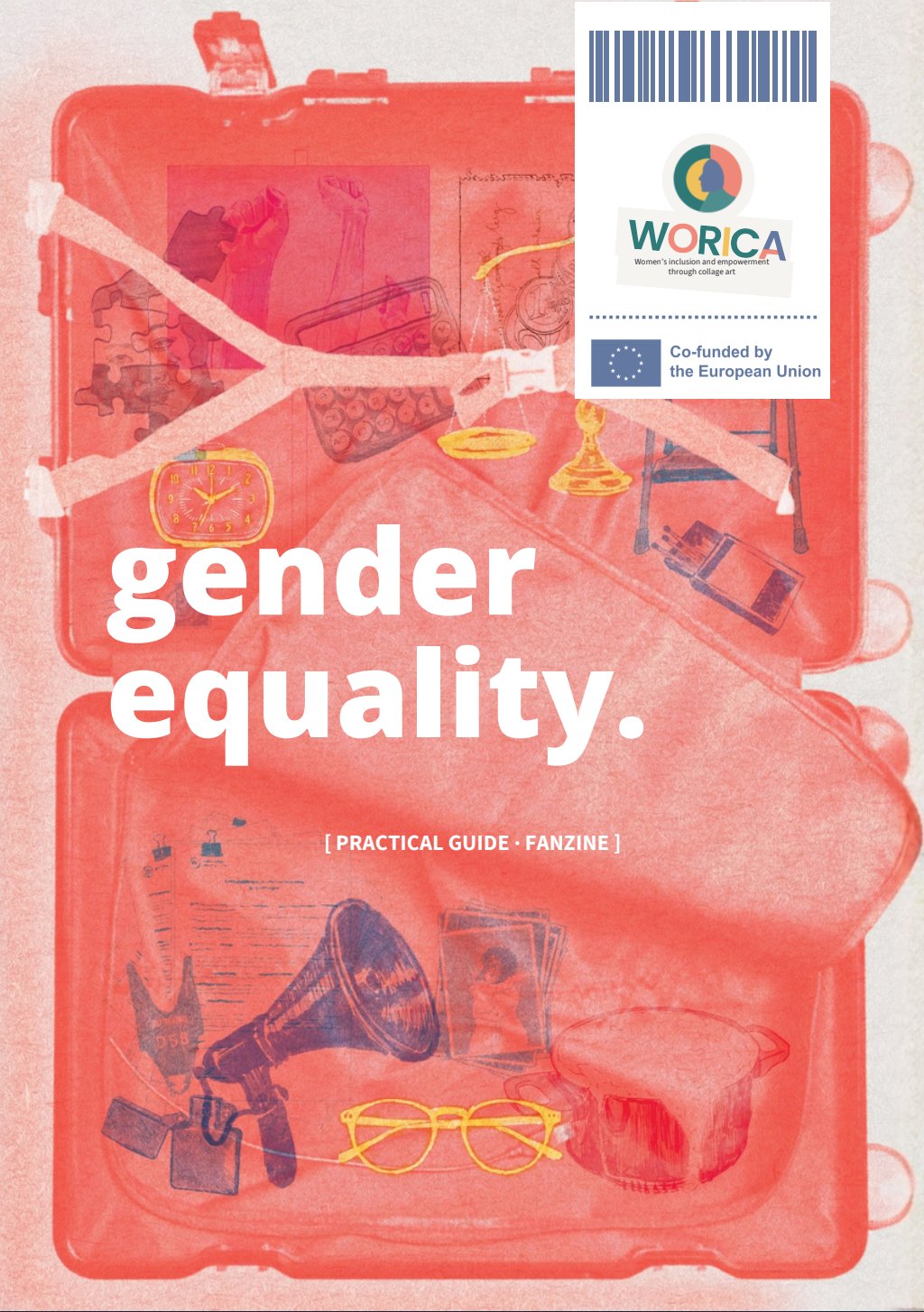
“Every woman deserves to know where she can turn.” With this sentence the Greek edition of the WORICA fanzine opens its last section: six pages, twelve services, each with a QR code. Prepared by SOFFA – Social Fashion Factory, the fanzine is available in Greek and in English.
Two languages, one guide
The Greek edition was edited by SOFFA, which also selected and checked the local resources. It is published in two languages for a simple reason: many of the women it is meant for are newcomers to Greece. The English version makes the same information available to women who do not yet read Greek – and to the friends, volunteers and professionals who support them.
The text follows the shared structure of the WORICA zine – seven steps, key concepts, seven rights – in plain language, and it is careful not to promise more than the law gives. Rights are described “in accordance with national law”, and readers are encouraged to ask a specialist service about their own situation.
Here you will find simple words and practical tools to recognise when something is not right and know what you can do. […] You are not alone.
WORICA fanzine, Greek edition (English version)
Words for what is hard to name
Some of the most useful lines of the Greek edition are its definitions. Time poverty: “When paid work and household tasks fill your whole day, leaving no time for rest, learning or enjoyment. Personal time is a right, not a luxury.” The mental load: “everything you must keep remembering, anticipating and organising”. Economic control: when someone controls your money or prevents you from working or having your own bank account – “Abuse does not need bruises to be real.”
On the rights of migrant women, the edition is equally direct: “A lack of documents does not justify violence.” Specialist services, it explains, can advise each woman on reporting, safe accommodation, healthcare and legal support in her particular situation.
Where to turn in Greece
The directory was checked in November 2026. It does not only list numbers; it explains how to use them:
- 112 – call or text, free, 24 hours a day. In an SMS, say what happened, where you are and whether anyone is injured. The police (100) can also be reached by SMS if you cannot speak: write your full name, your exact address and the nature of the emergency.
- SOS 15900 – the helpline for women experiencing violence, open 24 hours a day, 365 days a year (sos15900@isotita.gr): confidential counselling and referral to counselling centres and shelters. People who want to support a woman can call too.
- Counselling centres of the national network (KETHI) – free psychological, social, legal and employment counselling. In Athens: the Polycentre, 11–13 Kratinou Street, 210 520 2800, Monday to Friday 09:00–17:00.
- Diotima Centre – legal and psychosocial support against gender-based violence: 43A 3is Septemvriou Street, Athens, 210 324 4380.
- The Greek Ombudsman – the independent authority for equal treatment, which investigates discrimination complaints free of charge: 213 130 6600.
- The Labour Inspectorate (1555) for complaints about working conditions and harassment, and DYPA (1555) for job-search services, training and employment counselling.
- 1109 – the helpline against human trafficking and exploitation – and EKKA 197, free and around the clock, for urgent social support.
- Melissa – a network for the inclusion and empowerment of migrant and refugee women, 18 Feron Street, Athens (210 821 8486) – and the Migrant Integration Centre of Athens (210 524 6722) for psychosocial and legal counselling.
“These pages are for you, a friend, a colleague or anyone who may need them,” the fanzine says. “Knowing help exists and having its contact details readily available is already a form of protection.”
From the workshops to the page
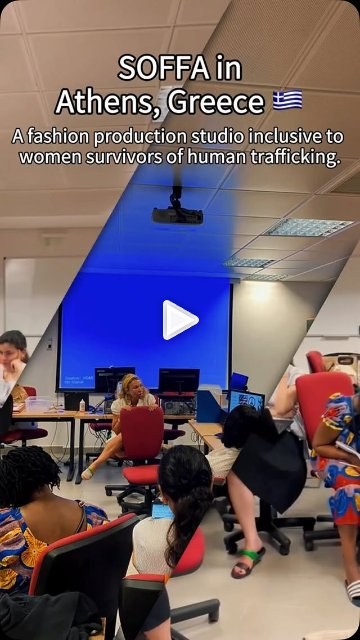
In Athens, SOFFA ran three Wear Your Origin workshops at the AUEB Lab with 18 women, among them storytellers and designers. Starting from cultural heritage and moving through moodboards, colour and sustainable design, the sessions treated every participant as a knowledge-holder and a co-creator: storytellers explained the meaning of their cultural references before designers made any aesthetic decision. The fanzine carries the same conviction onto paper – a woman who knows her rights, and knows where to find support, can take her place as a creator in her community. Read more about SOFFA – Social Fashion Factory.
Download, share, use it
All WORICA fanzines are free to download, print and share – together with the WORICA Handbook and the national Glossaries – in the Downloads section of worica.eu. If you work with women in a training centre, a community group or a counselling service, you are welcome to use them in your own sessions.
Read about the fanzine and its other editions, discover the stories behind them on the Women Empowerment Shows page, and follow @worica_eu on Instagram for the session films.
WORICA – Women inclusion and empowerment through collage art – is a 30-month Erasmus+ Cooperation Partnership in Adult Education (2025-1-SE01-KA220-ADU-000350853), coordinated by Folkuniversitetet (Sweden) with CEIPES (Italy), Brûlant·e·s (France), Fractals Educación Artística (Spain), ÖJAB (Austria) and SOFFA – Social Fashion Factory (Greece). It supports women aged 30–64, with a strong focus on women with migrant backgrounds, through rights education and collage art. Funded by the European Union.
Sorry, the comment form is closed at this time.