
26 Nov Your rights, your zine: the WORICA Gender Equality Fanzine is out
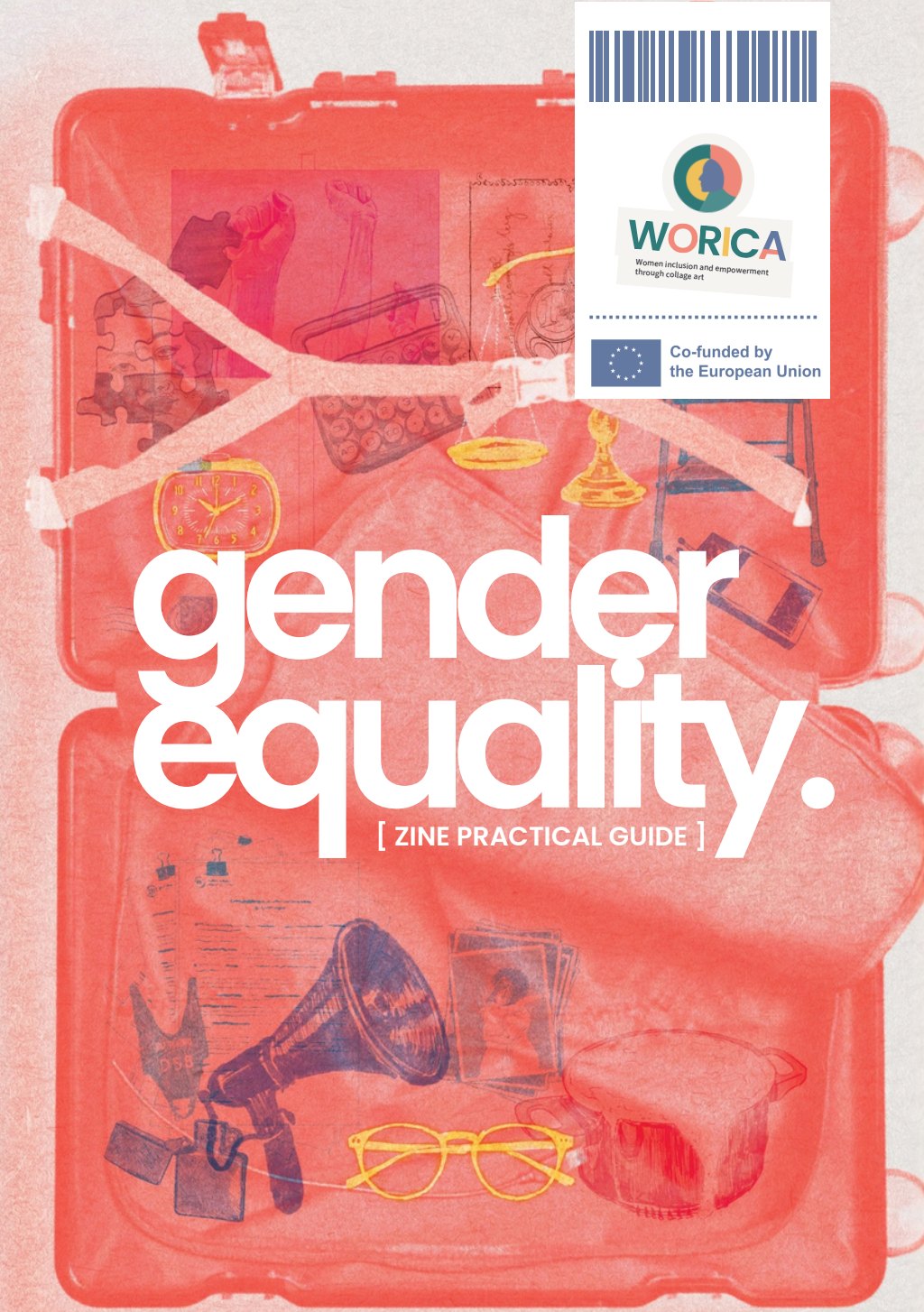
“You won’t find complicated laws or difficult words here.” That is how the WORICA Gender Equality Fanzine opens – and it keeps its word. In 25 illustrated pages it offers women “tools to recognize when something isn’t right, and to know what to do about it”. It is now available in a European edition in English and in six national editions for Greece, Italy, Sweden, France, Spain and Austria.
Why a fanzine?
Legal texts are long, technical and often available only in the national language. In the WORICA local sessions, women aged 30 to 64 – many of them with a migrant background – told us that they did not need more paperwork, but clear information connected to real life: at home, at work, in public services and in public space.
A fanzine is a small, self-made magazine with a long history in grassroots, feminist and community movements. It is made to be passed from hand to hand, photocopied, written on and shared. The WORICA zine keeps that spirit. It opens with the words “THIS FANZINE IS YOURS”.
You are not alone. This guide was born from women, with women, for women. Across six countries walking together toward the same goal: real equity.
WORICA Gender Equality Fanzine
Seven steps, in plain words
The first section is a path in seven steps, grounded in shared European principles and in the research the partners carried out on the laws and the lived realities of women in the six countries.
- 1. Naming violence. Violence against women “is not an isolated incident; it is not an inevitable fate; and it is not the fault of those who experience it”. It “often starts small, disguised as care or jealousy”, and it takes five forms: physical, sexual, psychological, economic and digital. The zine is clear: “You don’t need a bruise for it to count.”
- 2. Recognising discrimination. Direct discrimination is easy to spot – not being hired because you “might have children”. Indirect discrimination is harder to see: “a rule that looks equal for everyone but quietly punishes women”, such as rewarding only those who can do surprise overtime. And discrimination rarely stands alone: a migrant woman whose qualifications are not recognised may face “a double exclusion”.
- 3. Recognising the signs – at home, at work, in society, and in “invisible work”: the mental load “that isn’t shared and eats into your own time”.
- 4. Dealing with the situation, in five moves: your safety comes first (112 – free, 24/7, in every EU country); break the isolation, because “violence and discrimination thrive on silence”; document what is happening (“Don’t delete anything”); get professional support; and reclaim your independence – “Redress is a right, not a privilege.”
- 5. Protecting yourself from secondary victimisation – when “the wound reopens” because a woman who asks for help is doubted or blamed, with questions like “What were you wearing?”. The answer of the zine: “You have the right to be treated with dignity and confidentiality, always.”
- 6. Understanding European protections – the “European pillars”: equality as a constitutional principle; the Istanbul Convention, under which gender-based violence is never a “private matter”; equal pay and equal treatment; shared care; and free, independent equality bodies in every country.
- 7. Recognising the limits. The zine is honest: “a law doesn’t automatically guarantee safety or dignity day to day.” A lack of childcare, the cultural weight of care and the absence of women where decisions are made still stand in the way – even more so for migrant women, women with disabilities and women in rural areas. “Without a shared commitment to change, the law stays a promise still waiting to be kept.”
Nine words to name what we live
The second section is a small glossary. Its nine terms are the concepts that came up most often in the research in the six countries, reworded “so that anyone can understand and use them”, and grouped in three themes:
- Everyday realities – unpaid care work (“real work… it keeps society running”), time poverty (“Rest and personal time are rights, not luxuries”) and economic control (“Abuse does not need bruises to be real”).
- Invisible barriers – intersectionality, the gender pay gap (“Same effort, lower pay”) and the glass ceiling.
- Rights and taking action – gender equality, secondary victimisation and empowerment: “the power, confidence, and capacity to make your own choices, speak in your own voice, and rebuild your freedom”.
Seven rights – and what they mean for you
The third section is “a clear map of what you’re entitled to, so you always know where you stand”. Each page names one right and then translates it into a sentence that begins “What it means for you”:
- Equality and non-discrimination – “No law or practice can treat you as inferior.”
- Equal pay and fairness at work – equal pay for work of equal value, and no discrimination because you are pregnant “or might have children in the future”.
- Maternity protection and job security – “Becoming a mother must never cost you your job.”
- Shared family care and work–life balance – care is “a shared responsibility, not a burden meant for women alone”.
- Protection from violence and respect for consent – including the right to bodily autonomy and to immediate protection.
- Protection regardless of migration or legal status – “Violence and abuse are never acceptable, regardless of your residence papers.”
- Free legal support and independent equality bodies – “You do not have to face discrimination or injustice alone.”
Six countries, six directories
The six national editions add a fourth section, “Where to turn”: a directory of helplines, counselling centres, equality bodies, legal aid and community organisations, selected by the partner in each country. As the editions say, knowing that these services exist, and keeping them close at hand, is already a form of protection. Read about each one:
- Greece – a rights fanzine with a guide to help, from SOFFA
- Italy – a fanzine to name rights and find support, from CEIPES
- Sweden – rights, safety and belonging in the Swedish fanzine
- France – an inclusive, feminist fanzine from Brûlant·e·s
- Spain – an intersectional fanzine from València, by Fractals
- Austria – “Your rights. Your voice. Your life.” – women’s rights in easy language
Made together
The fanzine is a collective work of the whole partnership: its authors are Brûlant·e·s, CEIPES, Folkuniversitetet, Fractals Educación Artística, SOFFA and ÖJAB. The illustrations are by Alba López Cambronero and the design by Fractals Educación Artística in València; CEIPES coordinated the work, and Folkuniversitetet coordinates the project. Each national edition was translated and adapted by the partner in that country, so that the language and the support services speak to the women who live there.
Download, share, use it
All WORICA fanzines are free to download, print and share – together with the WORICA Handbook and the national Glossaries – in the Downloads section of worica.eu. If you work with women in a training centre, a community group or a counselling service, you are welcome to use them in your own sessions.
WORICA – Women inclusion and empowerment through collage art – is a 30-month Erasmus+ Cooperation Partnership in Adult Education (2025-1-SE01-KA220-ADU-000350853), coordinated by Folkuniversitetet (Sweden) with CEIPES (Italy), Brûlant·e·s (France), Fractals Educación Artística (Spain), ÖJAB (Austria) and SOFFA – Social Fashion Factory (Greece). It supports women aged 30–64, with a strong focus on women with migrant backgrounds, through rights education and collage art. Funded by the European Union.
Sorry, the comment form is closed at this time.