Home

Know your rights.
Create.
Connect.
Strengthen your voice.
Discover WORICA
WORICA supports women aged 30–64
to feel more confident, included
and informed about gender equality
and women’s rights.
Discover the project
Collage artwork made by women in a WORICA learning session

Know your rights. Create. Connect. Strengthen your voice.

WORICA – Women inclusion and empowerment through collage art

WORICA is a European adult education project for women aged 30–64 who want to strengthen their knowledge, confidence and opportunities in work and everyday life. It has a strong focus on women who face additional barriers, including women with migrant backgrounds, women with fewer opportunities in education, women experiencing unstable employment or economic insecurity, and women whose access to learning, services or participation may be affected by language, care responsibilities, discrimination or social isolation.

Across Sweden, France, Italy, Spain, Austria and Greece, WORICA creates women-centred learning spaces where gender equality is connected with practical information, creative expression and mutual support. Collage art is used as a tool for social transformation: images, colours, words, materials and digital tools can help women explore ideas, communicate experiences and develop new skills, including when speaking or writing is difficult.

You do not need to be an artist and you do not need to tell a personal story that you prefer to keep private. WORICA is built around participation, choice and respect. You can learn about rights, work with other women, create individually or together, and decide what you want to express and what you want to share.

Illustration of women creating a collage together

Why WORICA?

Gender equality is a fundamental right across Europe, but equality in law does not always mean equality in everyday life. The WORICA research in six countries shows strong legal frameworks on equal treatment, employment, pay, work-life balance, protection from violence and non-discrimination, while also showing persistent differences in implementation, access to services and the experiences of women who face several barriers at the same time.

The women who have already taken part in WORICA learning sessions brought these questions into real life. They spoke about unequal care responsibilities, employment and pay, language barriers, access to healthcare and services, stereotypes, discrimination, psychological and economic violence, migration, family responsibilities and the difficulty of knowing where to ask for help. They also spoke about friendship, cultural knowledge, professional skills, solidarity, creativity, new beginnings and the importance of spaces where women feel heard.

WORICA turns this knowledge into practical resources. The project is developing an EU Gender Equality Handbook with easy explanations, national information, a glossary and practical guidance; a Learning Programme that uses collage art and digital tools to develop hard and soft skills; and Women Empowerment Shows where the creative work produced through the programme can be shared with local communities.

What does gender equality mean in everyday life?

In WORICA, equality is not treated as an abstract idea. Equality means having equal rights, opportunities and respect. Inclusion means being able to participate, contribute and belong while your needs are respected. Empowerment means gaining knowledge, confidence, resources and influence over your own life. These ideas become practical when we ask what happens at work, at home, in education, in healthcare, in relationships, in public spaces and when we need support.

At work, equality includes fair pay, safe conditions, equal treatment, access to training and promotion, maternity and parental rights, and protection from harassment or abuse. At home and in family life, it also concerns care responsibilities, unpaid work, time, economic independence and the freedom to make decisions. In society, it includes safety, access to services, freedom from discrimination and the ability to have a voice in decisions that affect your life.

Illustration of a woman presenting her ideas

What can you find on this website?

Know your rights

The Gender Equality Handbook area brings together information from the six partner countries and the European context. It will help you understand key terms, recognise different forms of discrimination or unequal treatment, and find practical information about support.

Go to the Handbook →

Learn through collage

The Learning Programme combines collage art, visual literacy, digital skills and participatory learning. Communication, creativity, cooperation, problem-solving, leadership and digital confidence develop through the creative process rather than as separate classroom subjects.

Discover the programme →

Hear women’s voices

The Stories and Shows areas will share creative work, reflections and testimonies from women who choose to make them public. Nobody is required to disclose trauma or personal histories; each woman decides what remains private and what can become part of a public story.

Visit the Shows →

Follow activities in six countries

News from Sweden, France, Italy, Spain, Austria and Greece will show how partners and women are turning research into learning, creative work, local connections and future exhibitions.

See what is happening →

Women are already shaping WORICA

The early local learning sessions were not lectures. Women used drawing, photo-language, movement, mapping, fanzines, collage, role-play, discussion and creative reflection to connect legal information with everyday experience. In Sweden, drawing a ‘River of Life’ helped women with different literacy levels talk about safety, work, migration, family and belonging. In France, photo-language and collaborative discussion helped overcome shyness and language barriers. In Italy, fanzines and collage turned legal rights into visual language in a rural setting where women described the sessions as a rare listening space. In Spain, women co-created definitions of rights and transformed them into a visual collage dictionary. In Austria, movement-based discussion and practical rights information linked legal frameworks to stereotypes, care, work and support services. In Greece, moodboards, colour and cultural references positioned women as knowledge-holders in a co-creative design process.

Women’s voices

Words from women who took part in the first WORICA learning sessions.

Even though we come from different countries, many of our experiences as women were similar. I felt understood and supported.

— Participant in Sweden

I found this workshop very interesting because it allows us to talk openly about our rights. We can exchange ideas, learn new things, and better understand our position.

— Participant in France

It's nice to feel among friends and feel that we are not alone.

— Participant in Italy

What I always hope for: the collective and the unity that makes women strong.

— Participant in Spain

Latest from WORICA

Short films and stories from the six countries, published on the WORICA Instagram account.

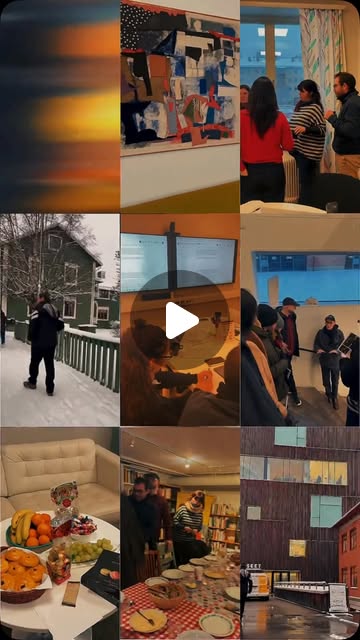
A European journey begins

The six partners meet in Umeå, Sweden, to launch WORICA.

Watch on Instagram →

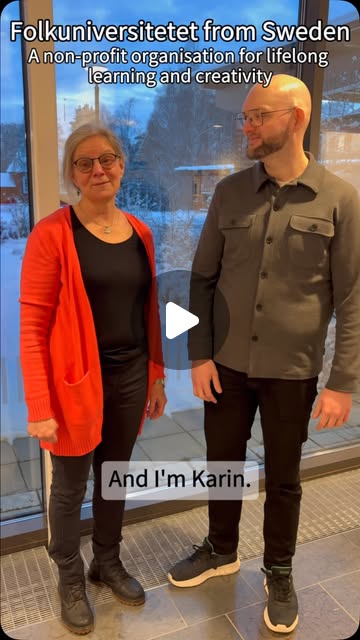
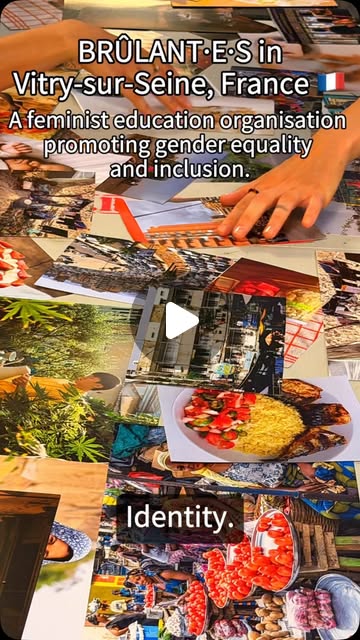
Meet the partners

Six short films introduce the organisations behind WORICA and their role in the project.

Watch on Instagram →

Stories from women

The first local learning sessions in France, Italy and Spain – what women explored and how they worked.

Watch on Instagram →

Project partners

WORICA is implemented by six organisations with experience in adult education, gender equality, social inclusion, creative arts and community work: Folkuniversitetet (Sweden, coordinator), Brûlant·e·s (France), CEIPES (Italy), Fractals Educación Artística (Spain), ÖJAB (Austria) and SOFFA – The Nest Social Cooperative Enterprise (Greece). Through this partnership, WORICA is implemented across six European countries, with shared goals and room for each partner to respond to its local context. The comparison between countries is part of the value of the project: women can see that rights, services and social realities differ, but many challenges around work, care, safety, discrimination, migration and participation are connected across borders.

Meet the partners →

Help us spread the word

Do you want to disseminate WORICA at an event, in your organisation or with the women you work with? Download the project flyer in your language and print it or share it digitally.

Printing tip: the flyer is A5, double-sided, and carries a QR code to this website. Print it at 100% size – one flyer per A5 sheet, or two per A4 sheet cut in half. If several reduced copies are printed on one page, the QR code becomes too small to scan.

Download the flyer: English · Svenska · Français · Español · Italiano · Deutsch · Ελληνικά

Stay connected

Follow the development of the Gender Equality Handbook, the Collage Art and Inclusion Learning Programme, local learning activities and the Women Empowerment Shows. The newsletter shares new resources, events and stories from the six partner countries in clear, accessible language. You can unsubscribe at any time through the link included in each newsletter.

Illustration of women connecting online