
26 Nov Italy: a fanzine to name rights and find support, from CEIPES
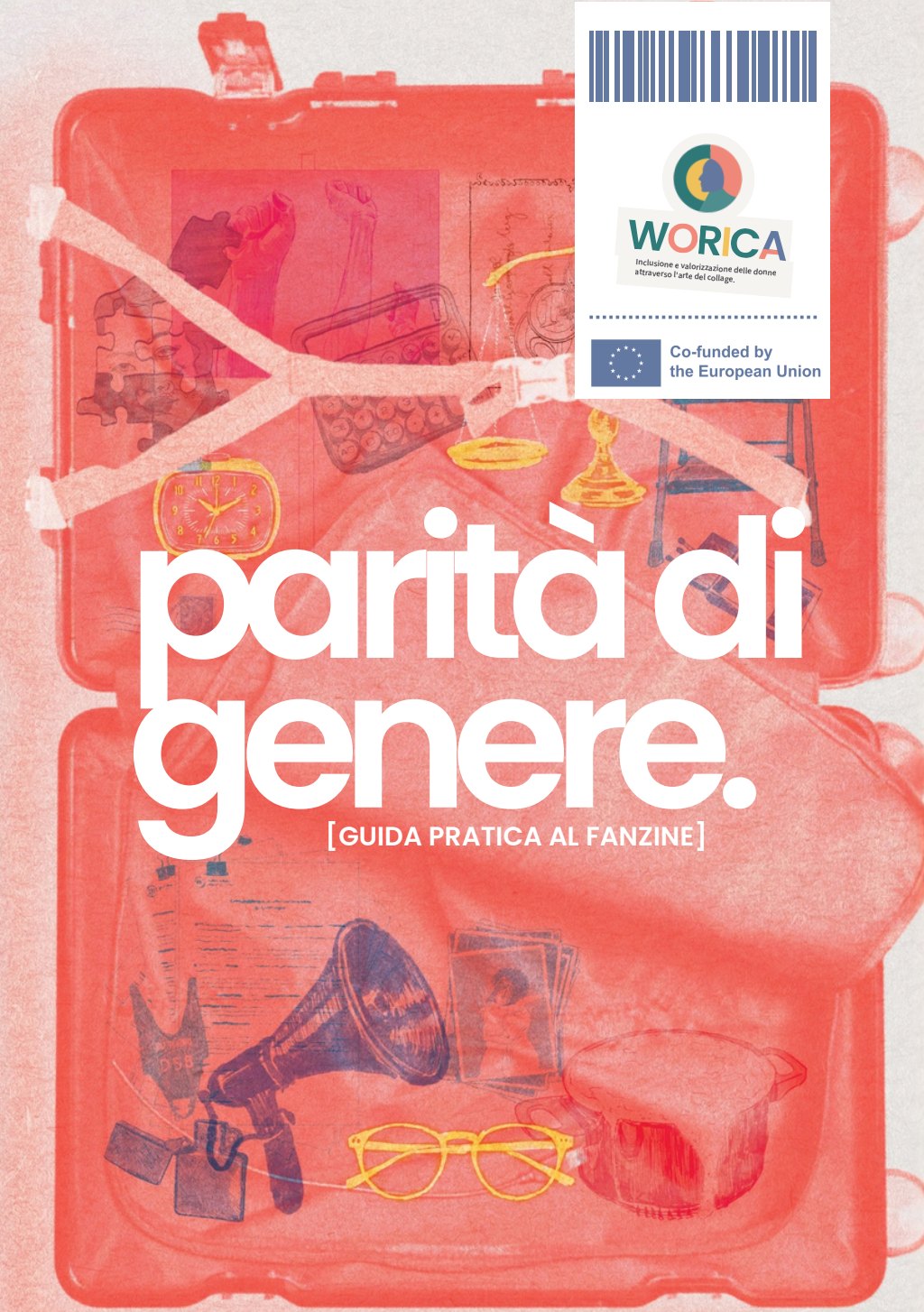
“Non sei sola.” You are not alone. The Italian edition of the WORICA fanzine – Parità di genere, a practical guide prepared by CEIPES in Palermo, repeats this sentence from its first page to its last. Between them, it turns women’s rights into clear words and images, and closes with the addresses of people who can help.
Between strong laws and daily reality
Italy has a solid legal framework: constitutional equality, equal pay and employment protection, maternity and parental rights, measures for gender balance in leadership and stronger responses to gender-based violence. Yet the WORICA national research found a continuing gap between these protections and the daily reality of women’s work, care responsibilities, unstable jobs, regional inequality and access to services.
The fanzine does not hide that gap; it names it. Its seventh step, Riconoscere i limiti – recognising the limits – says that barriers often run deeper “for migrant women, women with disabilities or those who live in rural areas”, and that laws can be too general to reach the places where they are needed most.
Le leggi da sole non bastano. La vera protezione nasce dalla consapevolezza, dalle risorse e, soprattutto, dalla comunità.
“Laws alone are not enough. Real protection comes from awareness, resources and, above all, community.” – WORICA fanzine, Italian edition
Words women can use
Like every edition, the Italian fanzine offers seven steps to recognise and respond to violence and discrimination, nine key words and seven rights. Its language is direct: “Non serve avere un livido perché qualcosa sia considerato violenza” – you do not need a bruise for something to count as violence. Rest and time for oneself are “diritti, non lussi” – rights, not luxuries. And becoming a mother “non deve mai costarti il lavoro” – must never cost you your job. Two terms, glass ceiling and empowerment, are kept in English, as they are commonly used in Italian, with an explanation beside them.
Where to turn in Italy
The directory – Elenco rapido – brings together national services and places in Palermo where a woman can walk in or simply send a message:
- 1522 – the national number against violence and stalking: a free call, or a chat on its website.
- Le Onde ETS – anti-violence centre, Viale Campania 25, Palermo; by phone on 091 327973, Monday to Friday, 09:00–19:00.
- Non è un veleno – Via Maletto 10, Palermo: a help desk in person, or by WhatsApp and Telegram (+39 375 52 09 518).
- PROTEGO – at Arci Tavola Tonda, in the Cantieri Culturali alla Zisa, Palermo: calls, messages or in person (+39 375 5190 167).
- D.i.Re – Donne in Rete contro la violenza – the national network of anti-violence centres, with a chat on its website.
- Microcredito di Libertà – microcredit for women leaving violence, accessible online or through a CAF, a tax assistance centre.
The last service is a reminder of something the fanzine says elsewhere: economic violence is violence, and independence is part of the way out. “Ogni passo (grande o piccolo) ricostruisce la tua libertà” – every step, big or small, rebuilds your freedom.
The fanzine in the sessions
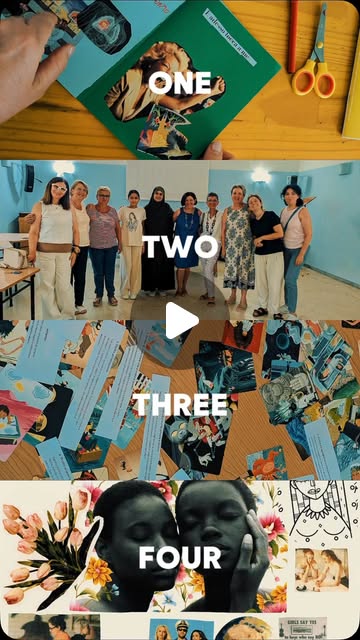
In Campobello di Licata, a rural town in the province of Agrigento, CEIPES created a rare listening space for local and migrant women. Fanzines were not only the result of this work but one of its methods: through fanzines, collage, role-play and debate, the women explored their rights, the gender glossary and the different forms of violence – and redefined the key words in their own language. They spoke about isolation and the lack of nearby support, and asked for more chances to meet.
Their message shaped the Italian edition: knowing a right is only the first step; women also need accessible services and trusted networks when they decide to ask for help. Read more about CEIPES.
Download, share, use it
All WORICA fanzines are free to download, print and share – together with the WORICA Handbook and the national Glossaries – in the Downloads section of worica.eu. If you work with women in a training centre, a community group or a counselling service, you are welcome to use them in your own sessions.
Read about the fanzine and its other editions, discover the stories behind them on the Women Empowerment Shows page, and follow @worica_eu on Instagram for the session films.
WORICA – Women inclusion and empowerment through collage art – is a 30-month Erasmus+ Cooperation Partnership in Adult Education (2025-1-SE01-KA220-ADU-000350853), coordinated by Folkuniversitetet (Sweden) with CEIPES (Italy), Brûlant·e·s (France), Fractals Educación Artística (Spain), ÖJAB (Austria) and SOFFA – Social Fashion Factory (Greece). It supports women aged 30–64, with a strong focus on women with migrant backgrounds, through rights education and collage art. Funded by the European Union.
Sorry, the comment form is closed at this time.