
26 Nov Sweden: rights, safety and belonging in the Swedish fanzine
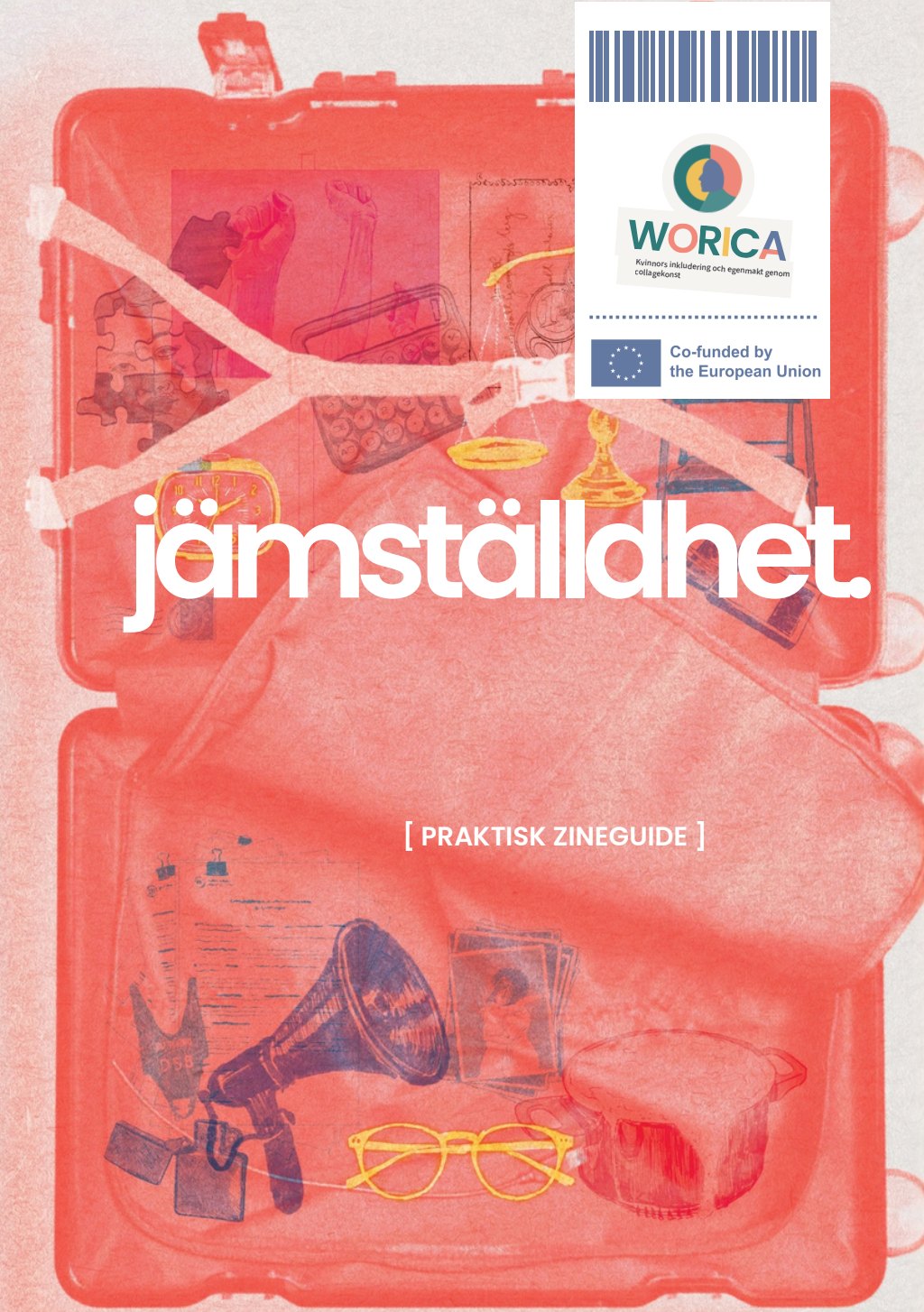
“Det här fanzinet är ditt.” This fanzine is yours. The Swedish edition of the WORICA fanzine – Jämställdhet. Praktisk zineguide – was prepared by Folkuniversitetet in Umeå. It explains women’s rights in plain Swedish, ties them to the places where they matter, and points to support that is free, anonymous and open day and night.
Strong systems, and the barriers that remain
Sweden’s gender equality policy rests on the goal that women and men should have the same power to shape society and their own lives. Anti-discrimination law, active measures, gender mainstreaming and a broad welfare system all support that goal. But the women who took part in the WORICA sessions in Umeå reminded the project that strong systems do not remove every barrier: they spoke about economic inequality, healthcare costs, a vulnerable position on the labour market and the experience of being a migrant woman.
The Swedish fanzine says the same thing in its own words: there is often a gap between rights in the law and life as it is actually lived.
Att en rättighet finns på papper betyder inte alltid att den ger trygghet eller värdighet i vardagen.
“That a right exists on paper does not always mean that it gives safety or dignity in everyday life.” – WORICA fanzine, Swedish edition
Plain Swedish for big words
For women who are still learning the language, words like sekundär viktimisering or intersektionalitet can be a wall. The Swedish edition takes them one by one and explains them simply. Tidsfattigdom – time poverty – is when the whole day goes to work and household tasks; rest and time of one’s own are “rättigheter, inte en lyx”: rights, not a luxury. Glastak, the glass ceiling, is the invisible barrier of stereotypes and prejudice. And empowerment becomes egenmakt – literally “power of one’s own”: the strength and confidence to make your own choices, speak with your own voice and rebuild your freedom.
The signs to look out for are organised by place – at home, at work, in society – in the same way that the women in Umeå mapped their city. One line stands out: being denied services because your documents are not in order “är också strukturellt våld” – is structural violence too.
Where to turn in Sweden
The directory is short and easy to remember. Every helpline in it is free, can be called anonymously, and answers around the clock, every day of the week:
- Kvinnofridslinjen, 116 016 – support for anyone who has been subjected to physical, psychological or sexual violence.
- Rätt att välja, 020 57 70 70 – for people exposed to threats, control or other violence linked to honour. Everyone, whatever their age, is welcome to call or chat.
- Stödlinjen för transpersoner, 020 55 00 00 – for trans and non-binary people who have experienced violence in a close relationship or sexual abuse.
- Roks (roks.se) – the national organisation for women’s and girls’ shelters; a QR code leads to every Roks shelter in Sweden.
- Informationsverige.se – an official website with practical information about Swedish society, rights and healthcare in eleven languages, for asylum seekers and new residents.
The last entry answers directly what the women in Umeå asked for: information that is translated, and connected to everyday situations.
From the River of Life to the city map
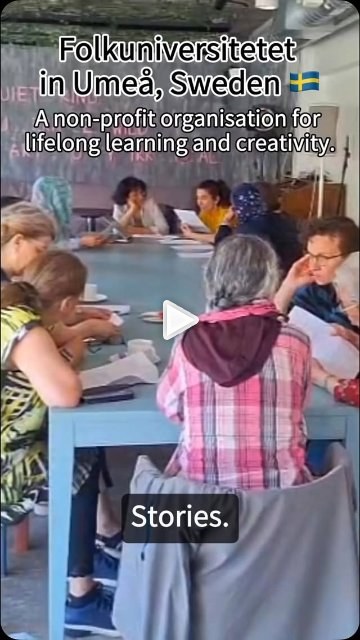
At Folkuniversitetet in Umeå, local and migrant women met for three sessions at Klossen, with 12, 13 and 16 participants. With the “River of Life” method they reflected on their own paths; on a collaborative city map they marked the places where rights, safety and belonging become real – the home, the school, the workplace, the hospital, public services, public space; and in a practical “How-To” session they worked out the concrete steps for getting information and help.
The fanzine continues that work on paper. As its last section says: knowing that these resources exist, and having them close at hand, is in itself a form of protection. Read more about Folkuniversitetet.
Download, share, use it
All WORICA fanzines are free to download, print and share – together with the WORICA Handbook and the national Glossaries – in the Downloads section of worica.eu. If you work with women in a training centre, a community group or a counselling service, you are welcome to use them in your own sessions.
Read about the fanzine and its other editions, discover the stories behind them on the Women Empowerment Shows page, and follow @worica_eu on Instagram for the session films.
WORICA – Women inclusion and empowerment through collage art – is a 30-month Erasmus+ Cooperation Partnership in Adult Education (2025-1-SE01-KA220-ADU-000350853), coordinated by Folkuniversitetet (Sweden) with CEIPES (Italy), Brûlant·e·s (France), Fractals Educación Artística (Spain), ÖJAB (Austria) and SOFFA – Social Fashion Factory (Greece). It supports women aged 30–64, with a strong focus on women with migrant backgrounds, through rights education and collage art. Funded by the European Union.
Sorry, the comment form is closed at this time.