
26 Nov France: an inclusive, feminist fanzine from Brûlant·e·s
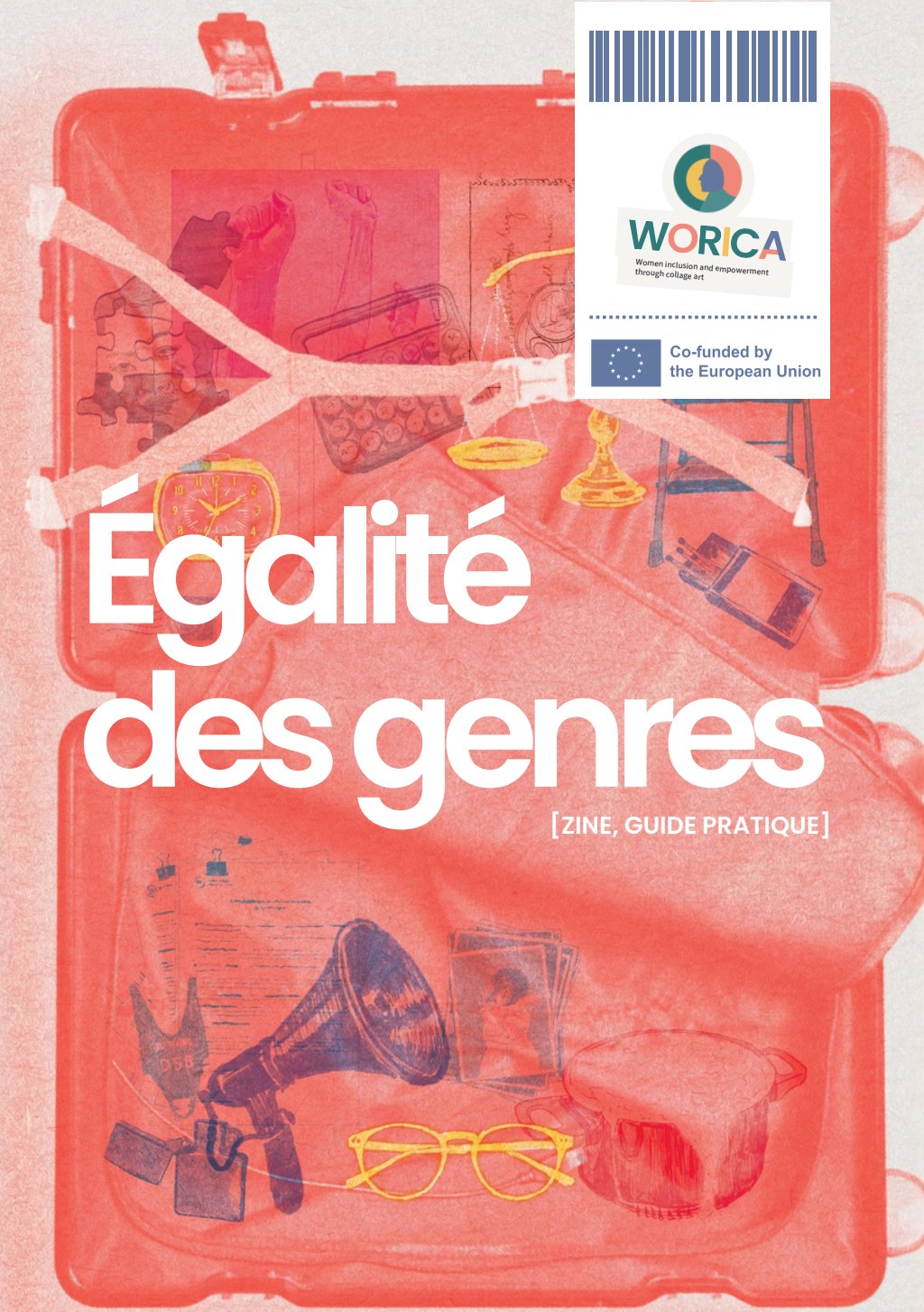
“Ce fanzine est pour toi.” The French edition of the WORICA fanzine speaks to its reader as a friend would – with tu, not vous. Prepared by Brûlant·e·s, Égalité des genres is written in inclusive French, runs to 32 pages and contains the largest directory of the whole series.
Who is this fanzine for?
The answer is on the first page, in a note that is a small lesson in itself. The fanzine is addressed first to women, “because they are one of the groups most exposed to gender-based discrimination”. But it is dedicated to anyone perceived as a woman, or likely to face sexist and sexual discrimination and violence, whatever their gender. That, the authors explain, is why they chose inclusive writing – seul·e, ami·e, avocat·e – to speak to the reader and about everyone else involved.
Tu n’es pas seul·e. Ce guide a été créé par des femmes, avec des femmes, pour les femmes au sein de six pays, qui avancent ensemble vers le même objectif : l’égalité réelle.
“You are not alone. This guide was created by women, with women, for women in six countries, moving together towards the same goal: real equality.” – WORICA fanzine, French edition
What Brûlant·e·s added
The French edition follows the shared structure of the WORICA zine – seven steps, nine key words, seven rights – and enriches it in several places:
- The mental load, defined. “The invisible work of managing and organising daily life and of constantly caring about the well-being of others. It is everything that happens in the head before and around the concrete tasks.”
- A name behind a concept. Intersectionality, the fanzine recalls, was developed in 1989 by Kimberlé Crenshaw, an American legal scholar and Afro-feminist.
- A workplace right many do not know. If you face discrimination at work, you can contact a trade union or the person appointed to deal with sexual harassment and sexist behaviour: companies with more than 250 employees are obliged to name one.
- A sentence for migrant women. Protection measures apply whatever your migration status – “even if your residence permit is linked to your partner”.
- French words for imported ideas. Care work becomes travail du care, the glass ceiling plafond de verre, and empowerment empouvoirement: “to (re)gain the power, the confidence and the ability to make your own choices”.
Where to turn in France
The directory fills five pages and is organised by need, with opening hours and the way to make contact for each service:
- Emergency numbers – 17 (police), 112, and 3919, the national helpline for women facing violence: free, anonymous, open 24 hours a day, and also there for the people around them.
- Legal support – the Défenseur des droits (09 69 39 00 00) and its local delegates; the anti-discrimination line 39 28; the Permanence d’Action Juridique Femmes; the AVFT, against violence towards women at work (01 45 84 24 24); and the CIDFF, with 98 centres across France for information on the rights of women and families.
- Information and prevention – Planning Familial (0 800 08 11 11, free call); SOS Mariage Forcé (01 30 31 05 05); and En avant toute(s), a chat for young people about relationships.
- Support after violence – the Collectif Féministe Contre le Viol (0800 05 95 95); the Fédération Nationale Solidarité Femmes and its local associations; France Victimes (116 006); and Women for Women France, a multilingual portal for anyone facing domestic violence, French or not.
- Institutions and advocacy – the Haut Conseil à l’Égalité, the Fondation des Femmes and, at European level, the European Women’s Lobby.
Photo-language, debate and embroidery
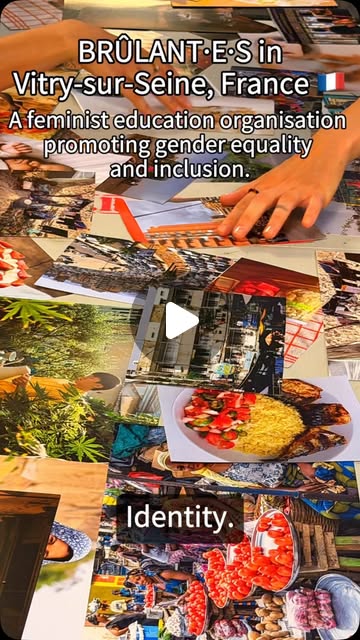
France has a long history of women’s rights, built step by step; yet the WORICA national report shows that immigrant women can still face inequalities where gender, migration status and economic insecurity meet. In Vitry-sur-Seine, Brûlant·e·s worked exactly in that space between the law and lived reality. Using photo-language, a moving debate and creative embroidery, the women moved from stereotypes to rights, work and economic independence, built shared definitions of the pay gap, the glass ceiling and unpaid care, and compared experiences across countries.
Several participants said that talking openly about rights helped them understand their own position – and gave them knowledge they could pass on to their children. Read more about Brûlant·e·s.
Download, share, use it
All WORICA fanzines are free to download, print and share – together with the WORICA Handbook and the national Glossaries – in the Downloads section of worica.eu. If you work with women in a training centre, a community group or a counselling service, you are welcome to use them in your own sessions.
Read about the fanzine and its other editions, discover the stories behind them on the Women Empowerment Shows page, and follow @worica_eu on Instagram for the session films.
WORICA – Women inclusion and empowerment through collage art – is a 30-month Erasmus+ Cooperation Partnership in Adult Education (2025-1-SE01-KA220-ADU-000350853), coordinated by Folkuniversitetet (Sweden) with CEIPES (Italy), Brûlant·e·s (France), Fractals Educación Artística (Spain), ÖJAB (Austria) and SOFFA – Social Fashion Factory (Greece). It supports women aged 30–64, with a strong focus on women with migrant backgrounds, through rights education and collage art. Funded by the European Union.
Sorry, the comment form is closed at this time.