
26 Nov Meet the partners: CEIPES, Italy – education and rights from Palermo to Europe
In a suburb of Palermo there is a building that once belonged to the Mafia. Today it holds a library of things, a web radio run by young volunteers, a pocket cinema-theatre and an “Empowerment Museum”. It is run by CEIPES – the organisation that, in WORICA, turns research on women’s rights into a Handbook that anyone can use.
An international centre in Palermo
CEIPES ETS – the International Centre for the Promotion of Education and Development – is a non-profit organisation based in Palermo, Sicily. With more than fifteen years of experience in European cooperation, it works at local, European and international level in synergy with over a hundred organisations, institutions and bodies. Its mission is to improve methods and technologies in education, to develop innovative strategies and to create participatory tools for working with both young people and adults.
Its work is organised around four areas: well-being, sport and disability; innovation, technology, sustainability and entrepreneurship; art, culture, design and gamification; and human and civil rights – with particular attention to people who face discrimination because of their origin, gender identity, sexual orientation, beliefs or socio-economic situation. CEIPES has its own Gender Equality Plan, and gender equality and the fight against discrimination run through its projects.
RISE-LAB: a confiscated building given back to the neighbourhood
The RISE-LAB centre is the place where these ideas touch the ground. Set up in a property confiscated from the Mafia, it is a social incubator for inclusion and active participation. Around it, CEIPES offers after-school support and non-formal education for the young people of the neighbourhood, English courses for adults, an employment agency, an information desk on European opportunities and a STEAM laboratory with 3D printers and virtual reality. Its Biblioteca delle Cose – a library of things – lends objects instead of books, a small daily exercise in sharing and circular economy.
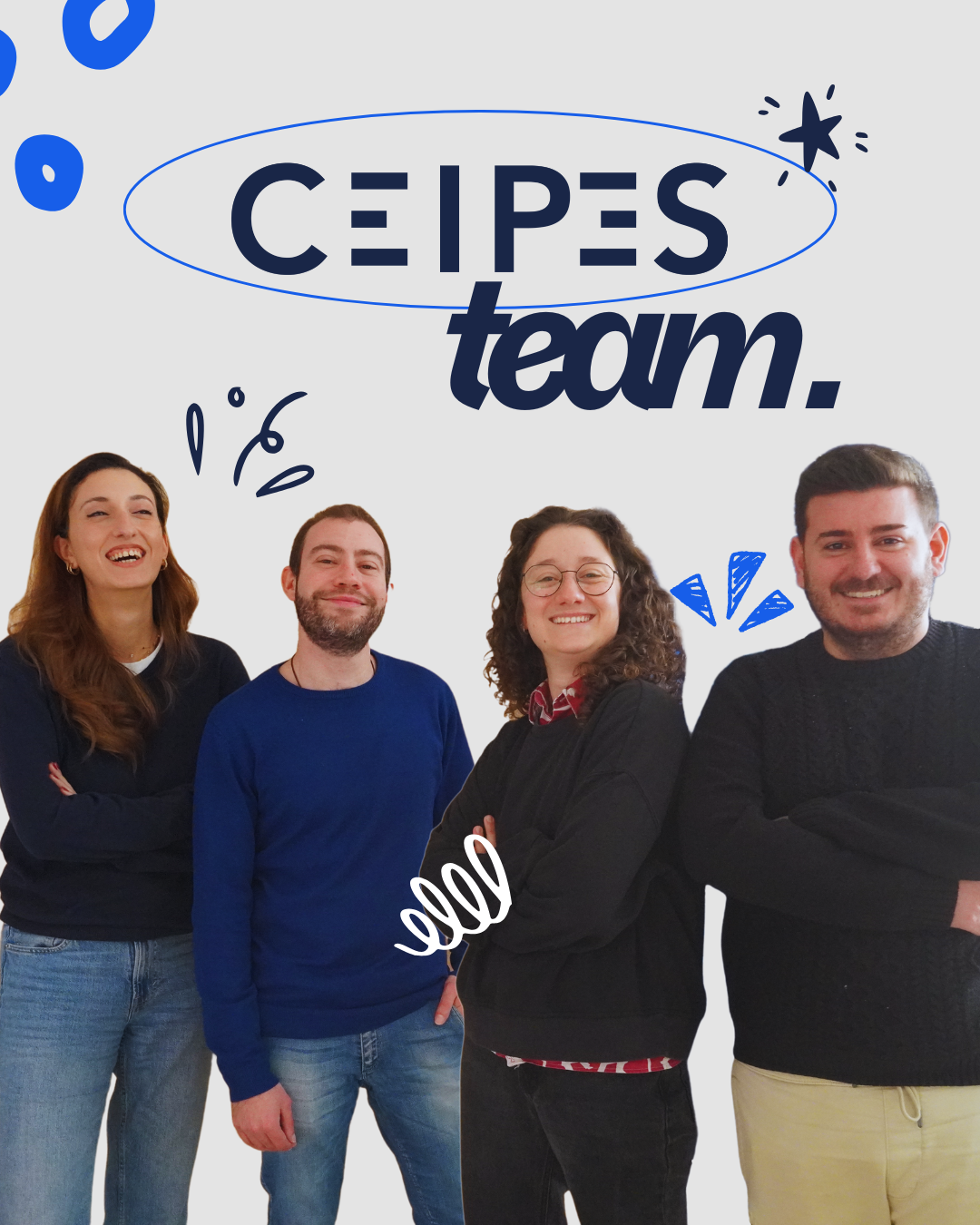
The team behind WORICA
- Domenica La Greca, project manager – a graduate in digital communication with experience abroad in political activism, inclusion, diversity and non-formal education.
- Andrea Filippo Calabria, project manager and unit responsible – trained in communication and cultural heritage, he works on projects that combine art, culture and non-formal education, with a focus on theatre, digital media and gamification. He has performed in more than twenty plays.
- Francesca Chiarenza, content creator – trained in the arts, music and entertainment and in television and film production, she follows the communication of the organisation and its projects from the idea to the final product.
- Ivan Busalacchi, accountant – responsible for the financial management and reporting of European projects.
Their role in WORICA
CEIPES leads the development of the EU Gender Equality Handbook, built from the six national reports, the international comparative report and the glossaries created with the women in each country. Its purpose is to move from legal language to information that can be recognised and used in everyday life. CEIPES also coordinated the work on the WORICA Gender Equality Fanzine and its six national editions, and contributes to the quality and the ethical dissemination of the project.
With women in Campobello di Licata
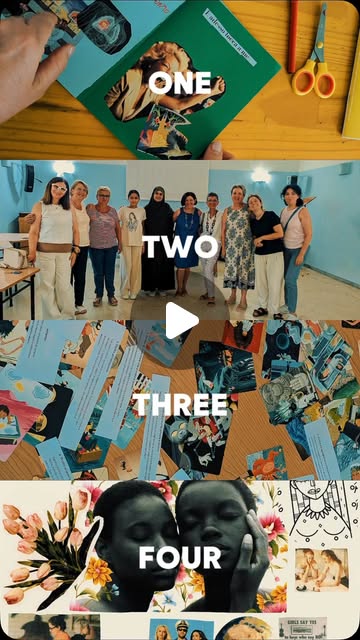
For the local sessions, CEIPES left the city for Campobello di Licata, a rural town in the province of Agrigento. There it created something the participants said they rarely find: a space to be listened to. Through fanzines, collage, role-play and debate, local and migrant women explored their rights, the gender glossary and the different forms of violence – and rewrote official definitions in simpler words that reflected their own lives.
They also named what is missing. In a rural setting, support can be far away, and isolation is part of daily life. The women asked for more chances to meet. Their message runs through the Italian edition of the fanzine: knowing a right is only the first step; women also need accessible services and trusted networks when they decide to ask for help.
One partnership, six countries
WORICA brings together six organisations – Folkuniversitetet (Sweden), Brûlant·e·s (France), CEIPES (Italy), Fractals Educación Artística (Spain), ÖJAB (Austria) and SOFFA – Social Fashion Factory (Greece) – with experience in adult education, gender equality, social inclusion, creative arts and community work. Each partner has its own role, but the resources are developed together so that they work across different national and cultural contexts. Meet the other partners in the News section, read more on the About page and watch the session films on the Women Empowerment Shows page.
WORICA – Women inclusion and empowerment through collage art – is a 30-month Erasmus+ Cooperation Partnership in Adult Education (2025-1-SE01-KA220-ADU-000350853). It supports women aged 30–64, with a strong focus on women with migrant backgrounds, through rights education and collage art. Funded by the European Union.
Sorry, the comment form is closed at this time.