Women Empowerment Shows

Where learning, creative work and community participation meet

Concept and approach

The Women Empowerment Shows are the point where learning, creative work and community participation meet. They are not planned as exhibitions in which women simply hand over finished work to be displayed. The approach is participatory: women develop individual and co-created pieces through the Learning Programme, write or shape the descriptions of their work, and take part in decisions about how creative work and messages are presented.

The art pieces are a main result of the learning process. Through collage and expanded creative practice, women can explore perspectives on gender, equality, identity, care, work, culture, belonging, personal experience and future possibilities. Some may choose to make work that is explicitly personal; others may prefer symbols, collective themes, social questions or imagined futures. Both forms of participation are equally valid.

WORICA’s early learning activities already show why this matters. In Greece, a moodboard worked best when the storyteller explained the meaning of a cultural reference before aesthetic decisions were made, protecting cultural meaning and recognising the woman as a knowledge-holder rather than simply a source of inspiration. In Spain, collage became a way to build empathy and make unfamiliar realities visible. In Italy, creative work helped women move from legal terminology to personal meaning. These lessons guide the exhibition process.

The shows also follow the project’s women-centred approach to consent and safety. Creative work can build confidence, connection and professional identity, but it must never require a woman to expose trauma. A participant decides which meanings remain private, which can be shared with a group and which can become public. The same principle applies to names, photographs, videos, quotations and personal stories.

The exhibitions will therefore be both creative and educational spaces: a place for women to make their work visible, for communities to encounter different perspectives, and for the project to show how art can support dialogue about equality and inclusion.

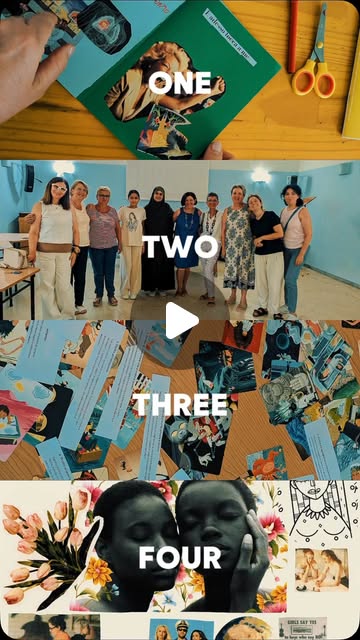
Collage artwork made by women in a WORICA learning session

What makes a Women Empowerment Show

  • Women decide. Participants shape the themes, select the works and help plan how the exhibition looks and speaks.
  • Art is the result, not a decoration. Each woman develops an individual piece with her own description, and each country also creates co-created pieces.
  • Consent comes first. Participation in an activity is separate from consent for photographs, video, quotations or public stories.
  • Open to the community. Family, friends, local organisations, educators and decision-makers are invited to meet the work and the women behind it.
  • One show in each country. Sweden, France, Italy, Spain, Austria and Greece will each host a local exhibition in 2027–2028.

Shows by country

Six local exhibitions are planned, one in each partner country. Dates, cities and venues will be announced here as soon as they are confirmed. Until then, here is what women in each country have already been exploring.

Sweden

Sweden

Early WORICA activities in Umeå have explored rights, safety, belonging, work, family and support through visual and participatory methods. Women drew Rivers of Life, mapped equality across places such as home, school, work and healthcare, and worked with practical case studies about violence, harassment and discrimination. These conversations will provide an important foundation for the later creative programme and the work women choose to present publicly.

Show date, city and venue: to be confirmed.

France

France

Activities in Vitry-sur-Seine have used photo-language, movement, drawing, group discussion and collaborative definitions to explore stereotypes, discrimination, women’s roles, rights and economic inequalities. Women compared France with countries of origin and discussed how legal progress is experienced in daily life. This combination of visual expression and open conversation will inform the next creative stage of WORICA in France.

Show date, city and venue: to be confirmed.

Italy

Italy

In Campobello di Licata, WORICA has created a rare listening and creative space for local and migrant women in a rural context. Fanzines, collage, role-play and group discussion helped women explore rights, social isolation, different forms of violence and the local availability of support. The strong sense of mutual support created in these sessions is an important basis for future creative work and community presentation.

Show date, city and venue: to be confirmed.

Spain

Spain

The Spanish sessions brought together legal reflection, intersectionality and collage. Women built a collective glossary, created visual definitions, used body mapping to connect what they learned, felt and could do, and used role-play to explore workplace violence, reporting and reparation. Participants repeatedly highlighted the value of a space for collective reflection and the desire to meet again, giving the future creative work a strong community foundation.

Show date, city and venue: to be confirmed.

Austria

Austria

The Austrian sessions used movement-based discussion, glossary activities and practical information to explore stereotypes, equal treatment, pay, care, parental leave, health, workplace opportunities and available support. Women compared different national contexts and discussed the difference between equality on paper and equality in lived experience. This reflective work can feed into the later creative process without predetermining what women choose to make.

Show date, city and venue: to be confirmed.

Greece

Greece

The Greek co-creative sessions connected cultural knowledge, origins, symbols, craft, colour and personal meaning with design decisions. Women discussed freedom, safety, belonging, heritage, work aspirations and the right to influence how their stories and references are used. This experience demonstrates a model of co-creation in which participants’ knowledge, authorship and choices remain central.

Show date, city and venue: to be confirmed.

Photo gallery and stories from women and partners

Stories behind the images

Every photograph or film on the WORICA website has a reason for being here. It is not a collection of event evidence; it is meant to help visitors understand the learning process, the creative work and the women-centred values of the project.

The gallery shows hands making collages, materials and details, group work, moodboards, visual maps, fanzines and final artworks, together with short captions that explain what was happening. Where a woman chooses to be identifiable, her story is connected to her work in the way she approves. Where she prefers privacy, the focus stays on the artwork, the process or a collective reflection without naming her.

WORICA has already learned that images can let women communicate when words are difficult. In France, photo-language reduced shyness across language barriers. In Italy, women said images helped them express emotions. In Spain, visual definitions enriched written ones. In Greece, cultural symbols and colours carried meaning without a full personal history.

The project’s photographs and short films are published first on the WORICA Instagram account and on LinkedIn. The films below link to Instagram; more photographs and artworks will be added here as consent for publication is confirmed with the women who made them.

Stories from women – the local learning sessions

In 2026 each partner brought together local and migrant women for participatory sessions on rights, equality and everyday life. These are the first WORICA stories: what women explored, how they worked and what they said. Where a short film has been published, the card links to it on Instagram.

France

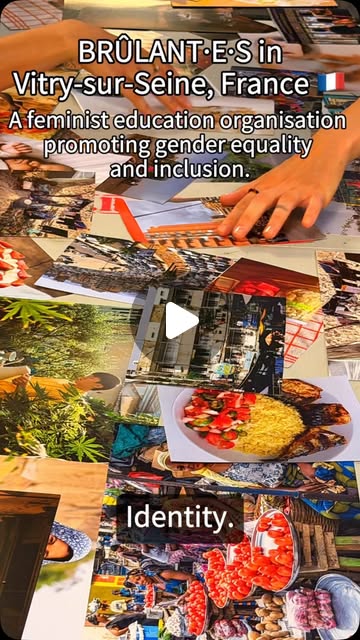
In Vitry-sur-Seine, Brûlant·e·s moved from stereotypes to rights, work and economic independence – using photo-language, moving debate and creative embroidery to build shared definitions of the pay gap, the glass ceiling and unpaid care.

Watch on Instagram →

Italy

In Campobello di Licata, CEIPES created a rare listening space for local and migrant women. Through fanzines, collage, role-play and debate they explored rights, the gender glossary and different forms of violence – and asked for more chances to meet.

Watch on Instagram →

Spain

In València, Fractals explored how gender intersects with race, migration, age and care. Women built a collective glossary and a “Collage-ABCdario”, using body mapping and role-play to connect what they knew, felt and could do (10, 12 and 8 participants).

Watch on Instagram →

Sweden

Sweden

At Folkuniversitetet in Umeå, local and migrant women joined three sessions at Klossen. Through the “River of Life” method, a collaborative city map and a practical “How-To” session, they connected rights, safety, belonging and everyday experience (12, 13 and 16 participants).

Short film coming soon.

Austria

Austria

In Austria, ÖJAB embedded the sessions in B2 German courses. A Mood Barometer and glossary work led into equal pay, care, parental leave and the glass ceiling, plus practical steps to recognise and document discrimination. In the third session, every participant rated it 5/5.

Short film coming soon.

Greece

Greece

In Athens, SOFFA ran three Wear Your Origin workshops at the AUEB Lab with 18 women, including storytellers and designers. From cultural heritage and moodboards to colour and sustainable design, women were recognised as knowledge-holders and co-creators.

Short film coming soon.

Meet the partners

Six organisations from Sweden, France, Italy, Spain, Austria and Greece came together in Umeå to begin the WORICA journey. Each short film introduces one partner and its role in the project.

Folkuniversitetet

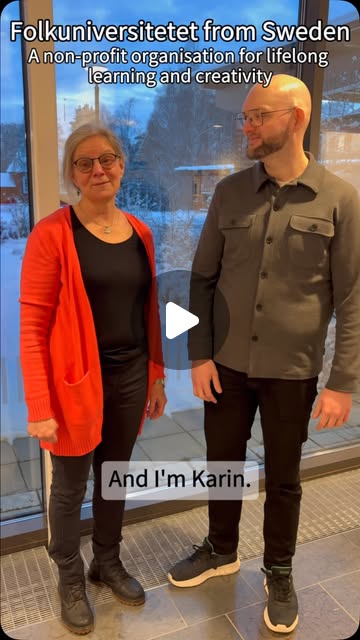
Coordinator of WORICA – adult education and folkbildning, based in Umeå, Sweden.

Watch on Instagram →

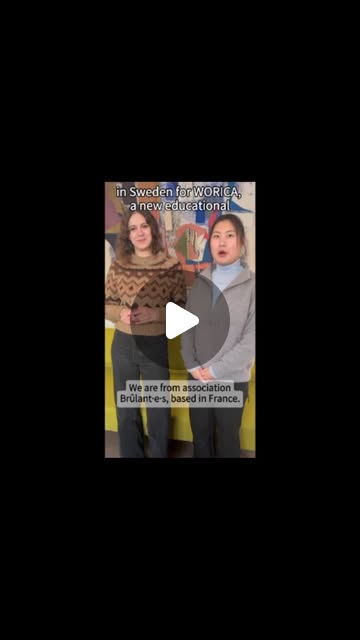
Brûlant·e·s

Feminist education and an intersectional approach, in Vitry-sur-Seine, France.

Watch on Instagram →

CEIPES

Education, inclusion and equal opportunities, based in Palermo, Italy.

Watch on Instagram →

Fractals Educación Artística

Art education for social transformation, based in València, Spain.

Watch on Instagram →

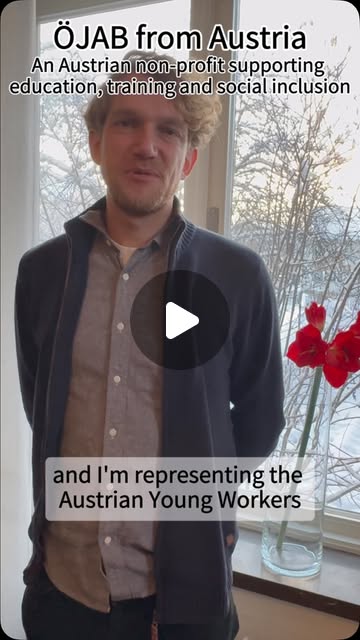
ÖJAB

Education, training and social inclusion across Austria.

Watch on Instagram →

SOFFA – Social Fashion Factory

Creative tailoring and women’s empowerment through sustainable fashion, in Athens, Greece.

Watch on Instagram →

Video testimonies from women

Alongside these project films, individual women may choose to share short video testimonies. These follow the same principles of choice, dignity and consent as the learning activities: a woman never has to disclose a difficult experience to take part, and she decides where her words appear, in which language, and for how long. Testimonies will be short, subtitled, and accompanied by a text summary so they remain accessible to everyone.

The first women’s testimonies will be added here as they are recorded and approved for publication.

News, events and newsletter archive

This is where the life of WORICA is shown as it develops across the six countries. Each update begins with a human question or activity and connects it to the wider project. Invitations, open calls, newly published resources and confirmed events are announced here, on our social channels and in the newsletter.

Latest updates

  • A European journey begins – the six partners meet in Umeå, Sweden, to launch WORICA. Watch on Instagram.
  • What WORICA stands for – know your rights, find your voice, create, connect, belong. Watch on Instagram.
  • Meet the six partners – short films introducing each organisation. See the series above.
  • Stories from women – the first local learning sessions in France, Italy and Spain. Read and watch.
  • Giving space to women’s voices – collages from the summer workshops in Italy. See on Instagram.

Follow WORICA on Instagram and LinkedIn for new films and stories as they are published. Every newsletter will also be archived here with a short summary. Want to be the first to know? Register for the newsletter.