
26 Nov Austria: “Your rights. Your voice. Your life.” – women’s rights in easy language
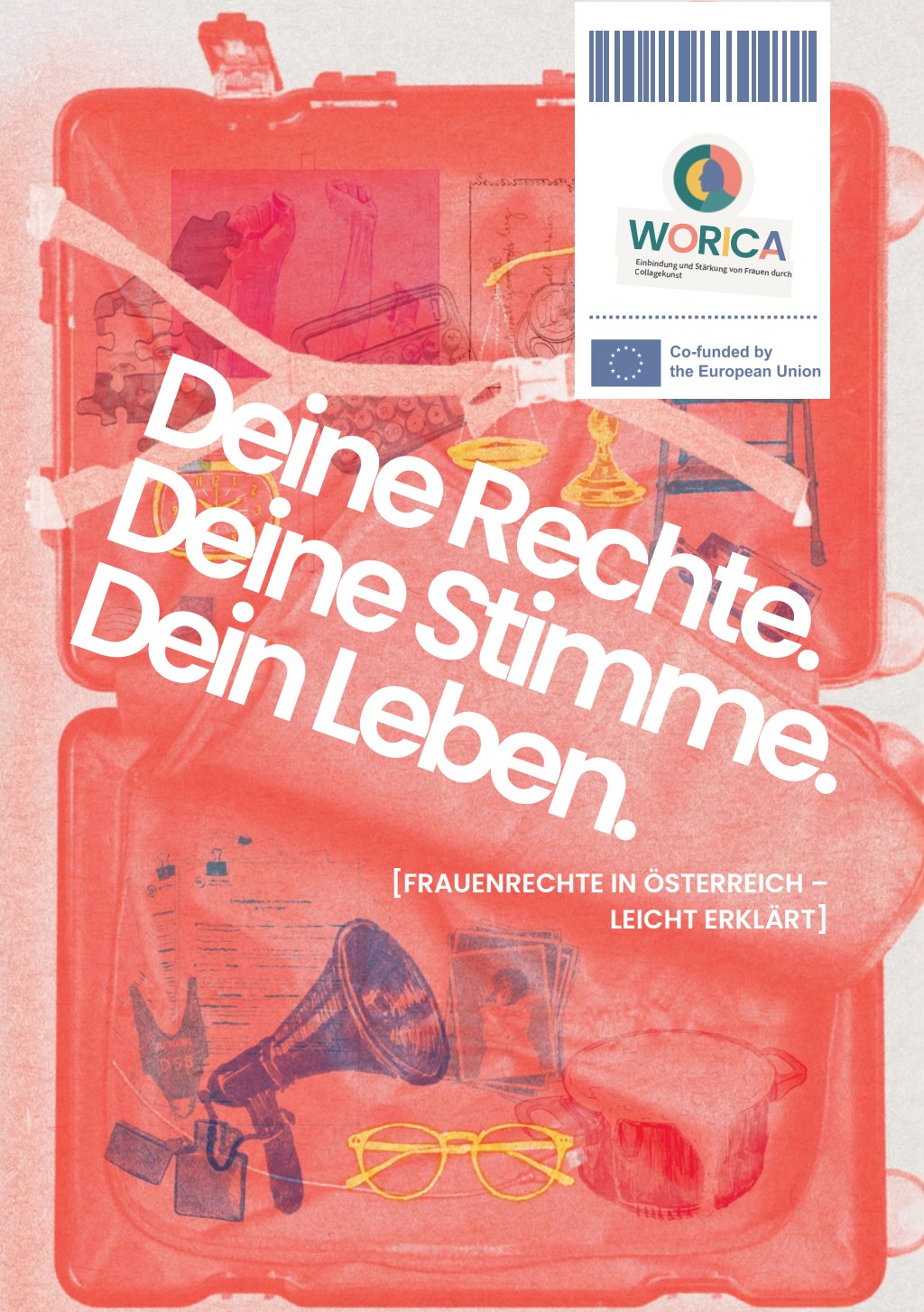
The other editions of the WORICA fanzine are called “Gender equality”. The Austrian one chose a different title: Deine Rechte. Deine Stimme. Dein Leben. – “Your rights. Your voice. Your life.” Its subtitle makes a promise: women’s rights in Austria, “leicht erklärt” – easily explained. Prepared by ÖJAB, it keeps that promise on every page.
Written for women who are learning German
ÖJAB ran the WORICA sessions inside German courses at B2 level, so the fanzine was written with language learners in mind: short sentences, everyday words, and the reader addressed directly as Du. The edition now online is an updated version, revised after a feedback session in which the text was reviewed – an example of how WORICA’s materials are shaped by the people who use them.
Keine komplizierten Gesetze, keine schwierigen Fachbegriffe. Stattdessen findest Du hier nützliche Tipps, um zu erkennen, wenn etwas für Dich nicht in Ordnung ist, und was Du dann tun kannst.
“No complicated laws, no difficult technical terms. Instead, you will find useful tips here to recognise when something is not right for you, and what you can do then.” – WORICA fanzine, Austrian edition
Small words that make a difference
Read closely, the Austrian edition is full of careful choices of language:
- It is written “von Frauen*, mit Frauen* und für Frauen*” – by, with and for women, with an asterisk that keeps the word open.
- Where German grammar would say man (“one”), the fanzine writes frau: “Anzeichen, auf die frau achten sollte” – signs a woman should look out for.
- The headings sound like advice from a friend: Was tun? (What to do?), Lass Dir von Profis helfen (Let professionals help you), Hole Dir Deine Unabhängigkeit zurück (Take back your independence).
- Secondary victimisation – one of the hardest terms in the glossary – is introduced with three simple words: Noch einmal verletzt, “hurt once again”.
- And time poverty ends with a sentence worth remembering in any language: “Zeit für sich selbst ist ein Recht, kein Luxus” – time for yourself is a right, not a luxury.
The content is the same as in every edition – seven steps to recognise and respond to violence and discrimination, nine key terms and seven rights that apply across the European Union – but nothing is assumed. Even the Istanbul Convention is explained in one line: it “obliges states to protect women from gender-based violence”.
Where to turn in Austria
“Jede sollte wissen, wo sie leicht Hilfe findet” – every woman should know where she can easily find help. The directory lists:
- Gleichbehandlungsanwaltschaft, the Ombud for Equal Treatment – 0800 206 119, with offices in Vienna, Linz, Innsbruck, Klagenfurt and Graz; an incident can also be reported through an online form.
- Frauen-Helpline gegen Gewalt – 0800 222 555, reachable around the clock, also for information about women’s shelters.
- LEFÖ – counselling for migrant women (0660 116 99 10), with a separate line for psychological counselling.
- ZARA – legal and psychosocial counselling for anyone affected by racism, and for people affected by or witnessing hate online (+43 1 929 13 99).
- Tamar – counselling for women and girls affected by sexual violence and abuse (+43 1 334 04 37).
- familienberatung.gv.at – an overview of all counselling services in Austria, which can be sorted by where you live, by topic and by language.
Inside the German classroom
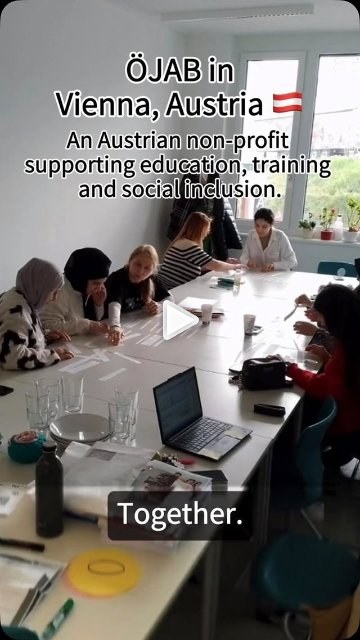
In the sessions, a Mood Barometer and work with the glossary led into equal pay, care, parental leave and the glass ceiling, and then into practical steps: how to recognise discrimination and how to document it. The response was clear – in the third session, every participant rated it 5 out of 5.
Learning about rights while learning German turned out to be a powerful combination: the vocabulary of rights becomes part of the language women will use at work, at the doctor’s and at public offices. Read more about ÖJAB.
Download, share, use it
All WORICA fanzines are free to download, print and share – together with the WORICA Handbook and the national Glossaries – in the Downloads section of worica.eu. If you work with women in a training centre, a community group or a counselling service, you are welcome to use them in your own sessions.
Read about the fanzine and its other editions, discover the stories behind them on the Women Empowerment Shows page, and follow @worica_eu on Instagram for the session films.
WORICA – Women inclusion and empowerment through collage art – is a 30-month Erasmus+ Cooperation Partnership in Adult Education (2025-1-SE01-KA220-ADU-000350853), coordinated by Folkuniversitetet (Sweden) with CEIPES (Italy), Brûlant·e·s (France), Fractals Educación Artística (Spain), ÖJAB (Austria) and SOFFA – Social Fashion Factory (Greece). It supports women aged 30–64, with a strong focus on women with migrant backgrounds, through rights education and collage art. Funded by the European Union.
Sorry, the comment form is closed at this time.